Sunday, February 14, 2016

In honor of Valentine’s Day: Writing a love poem


During the month of February, over 131 million cards are manufactured to celebrate Valentine’s Day. The messages may be simple or elaborate, silly or sentimental. For the poet, however, writing a love poem is truly a labor of love. It’s hard sometimes to find the right words or images to express one’s feelings for another person. Perhaps the best way to start is to read love poems written by the masters.

One of my favorite poets, Pablo Neruda, has written of love in many forms. In his One Hundred Love Sonnets, he writes: “I love you as certain dark things are to be loved,
in secret, between the shadow and the soul.” Here love is something honored but hidden. Sometimes he writes about unrequited love: “so I wait for you like a lonely house
till you will see me again and live in me. Till then my windows ache.” The writing is full of longing and loss. These words almost seem too sad to put into print but the poet perseveres because he has a desperate need to give voice to his feelings.

    There are many different kinds of love poems. Some are funny and playful while others tug at our heart strings. Christina Rossetti wrote: “I loved you first: but afterwards your love /Outsoaring mine, sang such a loftier song.” My all time favorite love poem is Christopher Marlowe’s “The Passionate Shepherd to His Love” where he writes: “Come live with me and be my love, And we will all the pleasures prove.” He references “pretty lambs” and “beds of roses.” Love poems have always been connected to springtime and the awakening of the natural world.

I often use my journal as a way to harness feelings and these fragments sometimes work their way into a poem. When my youngest son was fourteen, we spent an afternoon taking a long walk. I felt a real connection with him and wrote a poem about the experience entitled “The Power Lines.” I ended the poem: “Now, you take my hand. You are no longer a child, but you are my child. A sliver of moon rises over our heads.” This poem expresses my love for my child in a way a prose piece couldn’t.

Many times love poems incorporate memories of people we once loved. In my poem “On Considering Eye Surgery.” I wrote: “When you said good-by, I saw a globe of light floating away.” My imperfect vision  referenced the splintering of a relationship. In “Missing Person,” I wrote about my first boyfriend: “Simple things are left. A man and a woman walked together down a road.” The writing is also simple because I wanted to strip away the extraneous elements to the essence of our bond.

Don’t be afraid to try a love poem. It is a way to open up your inner voice and touch on universal human emotions. The poet Ellen Bass in her poem “The Morning After,” highlights those moments of passion and love that come to all of us: “I can’t see a trace of the little slice of heaven/we slipped into last night—a silk kimono floating satin ponds and copper koi, stars falling to the water.”

Saturday, January 16, 2016

New Year, New Ventures


With the advent of a new year, I make resolutions that never seem to change from year to year: write more, exercise more, spend more time with my family, etc. When I reread over my New Year’s resolutions for 2015, I had vowed to write a new poem a week and work on revisions. I didn’t keep that resolution but I did average about one new poem a month. I also worked on revising older poems and sending them out to journals.

My hard work has panned out. I had a poem, “Flax Pond, Brewster” in the 20th anniversary issue of the Aurorean (a literary journal based in Maine). I also have a poem forthcoming in the Cape Cod Poetry Review. My big news is that my chapbook, Gale Warnings, has just been published by Finishing Line Press. I am very proud of my slim volume of poems. It can be ordered from www.finishinglinepress.com (price $12.49).

The other big news is that I have a book forthcoming from the History Press – Legends and Lore of Cape Cod (pub. date is May 23). This is not poetry but a nonfiction book looking at many of the fascinating people, places and history that make up Cape Cod. This project comes out of my work as the newsroom librarian at the Cape Cod Times and my blog Cape Rewind (a look back at Cape history).

I am still attending the Steeple Street poetry group in Mashpee. Our meeting this morning was hosted by poet Sheila Whitehouse on the theme of “beginnings.” We have two events lined up for April, National History Month. On April 16, we’ll be reading at the Cotuit Library. Next, on April 23, I will be hosting a Common Threads event with fellow poet, Rich Youmans. I am very excited about taking part in these events celebrating poetry.

What are you planning for 2016? I would love to hear from you (e-mail me at rosmithj@yahoo.com). As Brad Paisley wrote, “Tomorrow, is the first blank page of a 365 page book. Write a good one.”

Tuesday, November 3, 2015

Away Time


For most of my life, I have written poems and stories. I also love to read and always enjoy having a good book on my bed stand. Recently, I have been immersed in a project that has taken me away from writing poetry and reading. This project, still under wraps, has consumed the better part of six months. It has been hard, exacting and exciting work but I long for the day I can return to my first love – writing poetry.

Sometimes when writers are suffering writer’s block or stuck in an emotional quagmire, writing becomes a chore. At those times, it’s good to step away. Many years ago, I had the opportunity to hear young adult author, Laurie Halse Anderson (author of Speak), at a writer’s retreat in Rhode Island. She urged us to explore other creative outlets that might fuel our art. She recommended visiting art galleries, taking a painting class, dancing, acting in a play, etc. The idea is that, as artists, we should get out of the usual way we see things and jumpstart our art by dipping into other disciplines.

Although I sometimes feel frustrated that I can’t wear my poet’s hat for another month, when I finally come back to my notebooks, I will perhaps have a renewed sense of purpose and a new way of seeing. Like Halse suggested, my poetic self will come alive having had some away time. I can go back with fresh eyes and fresh thoughts.

Thursday, September 24, 2015

A Fall Poem

Wild Turkeys    


                1.

 Rumors from the north country
 favor bobcat sightings.
 Here we have neither fat bear
 nor spindly moose
 but a family of wild turkeys
 crosses the driveway
 at dawn, the young ones
 scrabbling along the stones --
 beaks down, eager for
 acorns or nuts. The two females
 dull-brown, strut briskly
 as they scan for shelter.
 Soon enough they cross
  over to woodlands,
  a flock of feathers
  disappearing into brush.
         
    2.

   In mid-October
   the signs of change
   are everywhere.
   Red ferns, goldenrod,
   shy asters.
   When I burn the leaves
   of the aster plant,
    I drive away
    the evil spirits
    of the cold.
    Let the season
    begin. May the dry leaves
    leap and spin
     in the wild air.

                3.

    Autumn takes her

    first hostage,
    my delicate she-cat.
    No cry, no thrashing 
    in the underbrush. 
    Simply gone ...
    The shades of coyotes
     like the spirits of summer
     roam the edges of woodlots
     and forest paths.
     A blackened bush,
      victim of child’s play,
      belies the russet-colored leaves.
      Winter when it comes
      will swallow everything
       in shrouds of white.
                    
                   4.

     When a young turkey 
      goes missing
      the whole flock stops,
      waiting for the little one
      to return.
      Like them,
      I search the golden fields,
      the grassy inclines
      for that one moment
      when I spot the beloved,
      the world gone mad
      with the frenzy of my longing
       then a stalled breath,        
       then quiet, then
       fog lifting
       over the dark earth.

(From Dream of the Antique Dealer's Daughter, published by Word Poetry, 2013)
                    

Saturday, August 22, 2015

Poetry Group Update: Planning for Fall

One of the magical things about having a poetry group is sharing with my fellow poets. The Steeple Street Poets will celebrate its fourth anniversary next month and I have the satisfaction of knowing a good thing when I see it. Our group has grown, adding new members each month, and the energy and enthusiasm has swelled as the group has gotten larger. We have a core membership, perhaps ten to twelve poets, with other people jumping in when they have free time. Since the Cape is a seasonal place, there are also poets who join us in the summer months but head home when cold weather is on the horizon.

Our August meeting was a time for meet and greet, as well as for planning out the coming year. Our group is unique in that we alternate leaders each month and have different subjects introduced. In the past, we have worked on persona poems, line breaks, titles that work, etc. For the fall, we have some interesting projects to tackle. Often, we’ll be asked to bring in poems to workshop that fit the theme for that month.

In September, poetry member Kathleen Casey will talk about her time taking a workshop with Robert Pinsky on "how do you read a poem." She will take notes to share with us about her experience. Next, in October, dancers Samm Carlton and Karen Klein will explore poetry of movement and expression. They may introduce prompts for us to work with during the meeting.

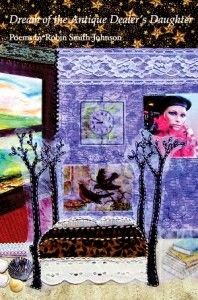
I will be leading the group in November with poems relating to fairy tales. This is a subject dear to my heart. In fact, I have a section of fairy tale poems in my book Dream of the Antique Dealer’s Daughter entitled “Once Upon A Time.” My hope is that poets will bring in poems either reworking fairy tales or somehow referencing them in their poems. I plan to bring in examples by famous poets (for example, Olga Broumas and Anne Sexton) to share with the group.

In December, co-founder James Kershner will ask us to write poems of origin (where we come from). He was fortunate to attend a writing conference at Wild Acres in Little Switzerland, North Carolina, this summer where he was asked to write an origin poem.
His poem was descriptive, funny and heartbreaking. I already have ideas for mine.


In the end, it’s all about feeling comfortable reading our poems together, doing an honest critique, and forging a community of like-minded poets. 

Sunday, July 26, 2015

A Summer's Poem

The Art of Levitating
-- South Cape Beach, Mashpee


In between the swimmers,
and far off, a lone sailboat or two,
is a man floating.
His face and palms, lifted
to an orange sun,
are a supplicant to light.

For many minutes he drifts
and seems suspended in water,
as in an earlier century,
Daniel Danglas Home
floated in the air eighty feet
above ground, then glided

through an open window
and sat to chat with friends.
But here there is no Tolstoy,
no Elizabeth Barrett Browning,
no applauding princes or queens
to watch our swimmer

weightless in water.
The waves lift, fall –
his globed face upturned.
For this moment, he escapes
to lightness, to buoyancy,
to the moment between lifting up

or sinking
blissful in the embrace

of forgetting.

(from Dream of the Antique Dealer's Daughter, Word Poetry, 2013)

Monday, July 6, 2015

Finding inspiration in unexpected places


While cleaning out my desk at work recently, I found a note penned by my father. Since he passed away in November 2011, I know it was written some time ago. He writes “Thanks for all the e-mails and poems and stuff. I’ve been doing some writing and once in awhile I look at past writing. This little story “A Special Breed” was published in the Cape Codder about twenty years ago in slightly different form. Maybe you could pass it on to the editors of “Prime Time.” Maybe they could publish it. Hope so.” (Note: Prime Time is a magazine for people over 45 published monthly by the Cape Cod Times.)

I was struck by how persistent my dad was about his writing. He was always sending out queries to editors for his stories which he called “Wendell’s Briefs.” Some of these were published, but many were not.  Somehow, he never lost his faith that it was worth writing and sending out his work.

I miss my father and treasure this small letter I had tucked away for future reading. Now it’s time to carry on his tradition: write and keep sending out my writing. As Isaac Asimov said, “You must keep sending work out; you must never let a manuscript do nothing but eat its head off in a drawer. You send that work out again and again, while you're working on another one. If you have talent, you will receive some measure of success - but only if you persist.”